MUSIC VIDEOS ARE ALIVE AGAIN

It’s 2025 and most times when I hear artists speaking on music videos, I hear the worst three letters any creative could think of…ROI. ROI, short for Return On Investment, is a term that confuses me when put alongside music videos. How, why and when did we get here? Let’s try figure this out together, shall we?
Let’s start at what a music video should be. I believe most people would say that the music video should reflect the story or theme being carried throughout the song itself. Almost like an official soundtrack to a short film/movie. One of my favourite examples to use is Busta Rhyme’s What’s It’s Gonna Be music video where he features Janet Jackson in this futuristic alien world and Busta Rhymes is a meta morphing hybrid of human and silver galactic goo that is trying to impress and attract the lovely, gorgeous, beautiful and seductive Janet Jackson.
You probably like what the hell but in the context of the song, speaking on sexually arousing your partner and trying and exploring new things it fits perfectly with Busta Showing that no matter the body type he’s ready to shift and form into whatever pleases his lover and their adventurous nature of exploring the new, untested to find their future pleasures.
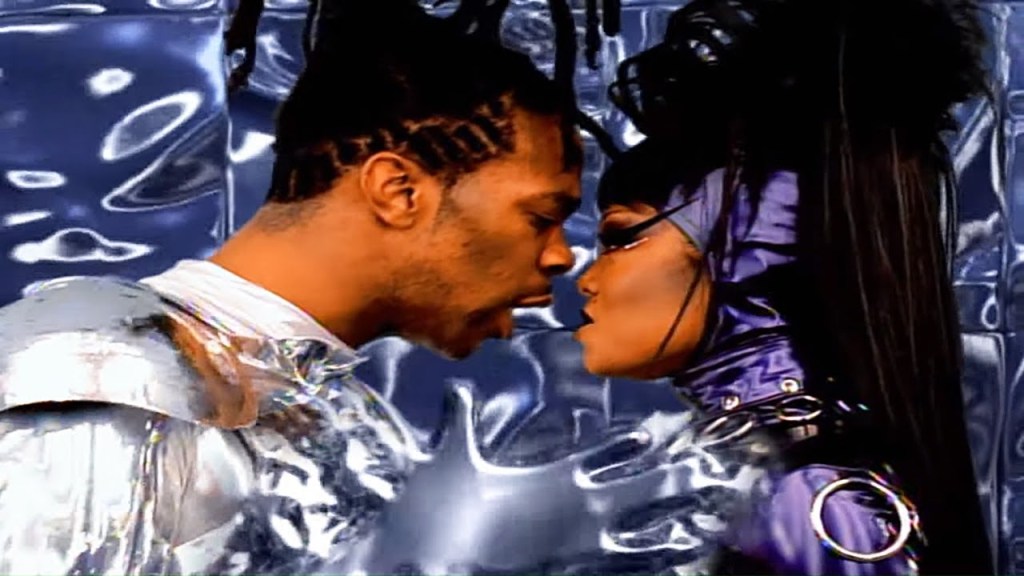
Now the music video, directed by Hype Williams, cost $2.4 million making it the 8th most expensive music video at the time in 1999. It is now the 15th most expensive music video of all time with Micheal & Janet’s Jackson Scream still sitting at number 1 costing $7 million. With all these expensive videos, I don’t believe anyone ever asked what the financial return on it is but rather how big of a cultural impact and legacy it will have. These have become iconic videos that have been in conversation and been a source of inspiration for 25+ years. It was the experience valued more than the expenses.
Today it feels as though roles have flipped and it’s the expenses over the experiences. You could say it’s the economy, labels and artists don’t want to pay videographers/writers/models/actors their rates, it’s the new age and their short attention span and so on and so on. My belief is that TV stations that were meant to be music based, spotlighting and highlighting the latest videos started turning to reality TV shows for viewer engagement and started choosing what videos get played based on the relevancy of the artist instead of the quality of the music and video.
This caused a surge in artists to then rather post their videos up on digital platforms that did care about the quality still but that could also pay them through royalties based on the viewers and viewer engagement. Platforms such as Vevo were created and ran the YouTube streets for a mean minute. It became a cultural hub where, if you weren’t on Vevo then you just weren’t it at all.

Artists & labels saw what platforms like Vevo could do for the artist and how their ad-revenue model could be used in their own favour and then started creating their own YouTube pages and channels to engage with their fans directly without a third party. From being on YouTube, I believe they saw fan pages were people were making their own videos and visuals, as well as posting the songs online themselves and that this was the canon event where both artists & labels realised that in this digital streaming age it doesn’t matter what you put out, people just want to see some cool sh*t while listening to your music.
This births the monstrosity that is the visualiser. Instead of knowing investing, time, energy and money into creating a video and world out of your song, artists just started to shoot some cool scenes and put it on loop to their song. It even started flooding into music videos where now it’s no storyline, no story, no theme just a bunch of cool visuals, hot people and some flash of the material or gangster lifestyle. This was a painful era. I thought we had lost the art of the music video forever.
The youth of South Africa had a different plan for me instead. I would personally say, “Since 2016.”, but speaking objectively…since 2020 South African creatives have been in the spotlight. The Covid pandemic causing us to sit inside and forced us to sit with the art we consume and think about it. The world saw that South Africa has a different hunger because we’ve always asked for our story to be told but now, we realise we never need permission just our own belief that we are big enough to tell our own stories, and our art is undeniably great. We are enriched in stories, culture and heritage that the world had and has yet to experience fully.
Taking control of their own narrative, the youth of South Africa started investing and believing heavily in themselves which has seen a rise in all art forms and music from Hip-Hop, to R&B, to Amapiano, to Gqom. The wave is on a high tide building up to a massive tsunami that is sure to engulf the world.

In the last 5 years I’ve seen some stunning music videos been produced from our local talent. Last year Filah-Lah-Lah released a whole visual album based on her album On Air. Zulo has been exceptional in present story lined theme videos. We’ve seen directors like Lotus Sutra provide us with some of the craziest videos in the hip-hop, r&b and piano world. Same for the likes of Zigi Ndlovu and many more, where directors and producers are being booked and hired to get the best vision out of the song and artist.
As beautiful as it has been to witness the resurgence of the music video and especially in South Africa, we still have many challenges to face. Social media is one of them with people able to rack up views through creating dance challenges to their songs and have it trending or just shooting a really dope ass visualiser. It makes rising artists with little budget think, “Why do I need to pay for a music video?”. This also leads into the conversation that because people aren’t as invested in music videos they don’t really know who the directors and producers have to go through so, once they do have the bag to pay for one they either try underpay or short change them or try go for a foreign name because they are a “bigger brand or name”.
The world of music videos is not yet completely extinct but keeping it alive is no easy task as well. Do you think it’s worth it to try keep them alive or should we move and accept the visualiser as our new art form?
 FRATPACKER WORLD.
Leave a comment